
Driveways, decks, houses and commercial sites
Pressure Washing in Melbourne
Pressure washing in Melbourne for driveways, concrete, pavers, decks, brick and house walls, with the pressure set to suit each surface so it comes up clean without etching, furring or stripping. Send us a photo and your suburb, and we reply with the method we would use and a written price.
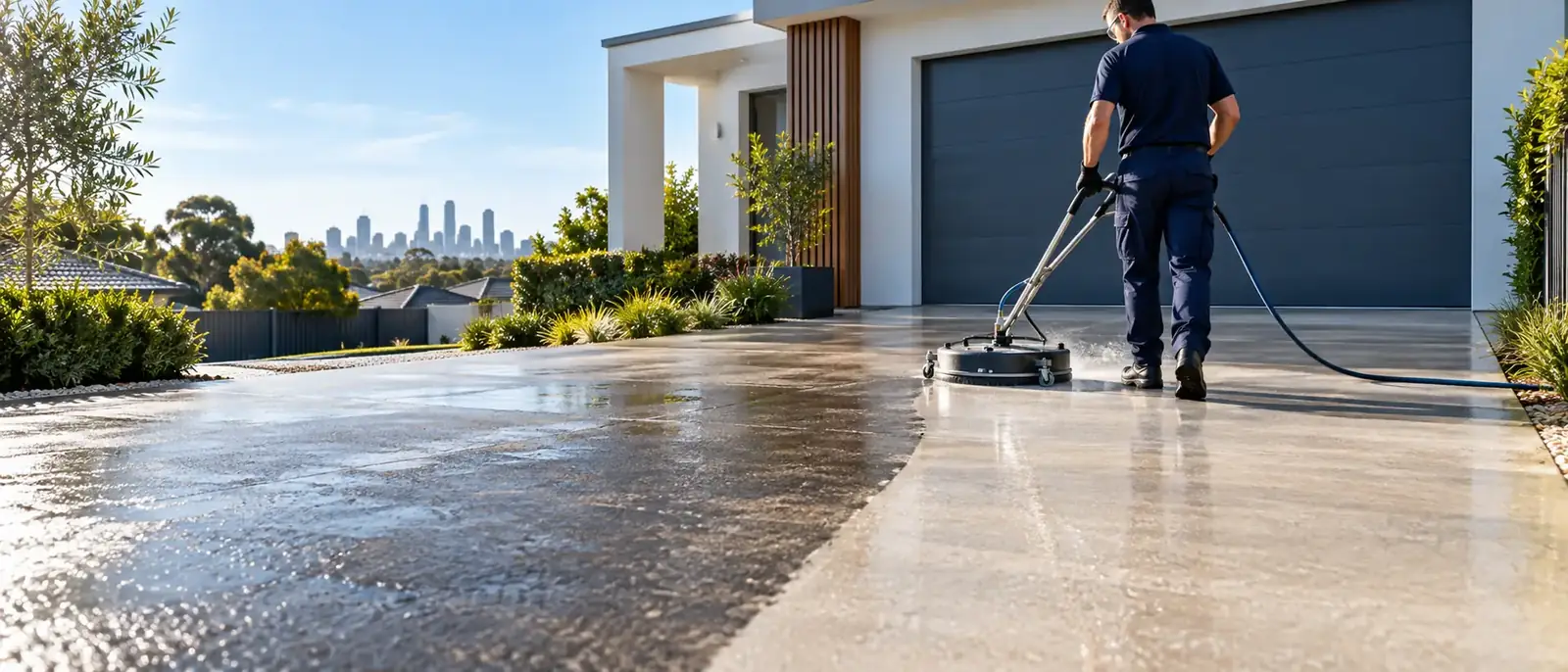
Concrete drivewayRotary surface cleaner, cold waterIllustration. Drag to compare
Public liability insuredCertificate of currency sent with any quote on request.
Pressure set per surfaceHigh for concrete, low for timber, soft wash for render.
Run-off managedWash water swept, blocked or recovered, never sent to the drain.
Quoted from photosA written price before anyone unrolls a hose.
What the job is
What does pressure washing in Melbourne involve?
Pressure washing in Melbourne means cleaning outdoor hard surfaces with pressurised water, set to what the surface can take. Concrete gets high pressure through a rotary surface cleaner. Timber, render and soft stone get low pressure or a soft wash. Done properly, dirt, mould, algae and grime come off and the surface is left unmarked.
Most requests for pressure cleaning in Melbourne come down to the same handful of problems, because the climate is hard on outdoor surfaces in its own way. Long, damp winters let black mould and green algae settle into the shaded strip of concrete along a side fence. Gum leaves and oak leaves leave brown tannin shadows on pavers. Cars drip oil onto the same patch of driveway for years, and hot tyres turning in the garage entry leave rubber marks. None of it harms the concrete much, but it all makes a property look tired, and some of it, like algae on a path, makes it slippery.
The water pressure is only part of the job. Most growth needs a treatment first so it dies back to the root instead of reappearing in a few months. Oil needs a degreaser and time to work. Then the clean itself has to be even. A hand wand held at a changing distance leaves the pale zebra stripes you often see after a weekend with a hire machine. A rotary surface cleaner keeps its nozzles at a fixed height, so a whole driveway dries to one even colour.
That is why the method changes from one surface to the next, and why we ask for a photo before quoting: a sandstone patio and an exposed aggregate driveway need different kit, different pressure and a different amount of time.
Services
Which pressure cleaning services can you book?
You can book pressure washing services for eight kinds of job across Melbourne: driveways, general concrete, oil-stained concrete, pavers and patios, decks, brick, house walls and commercial sites. Each one gets its own method and its own page, and most homes combine two or three in a single visit.
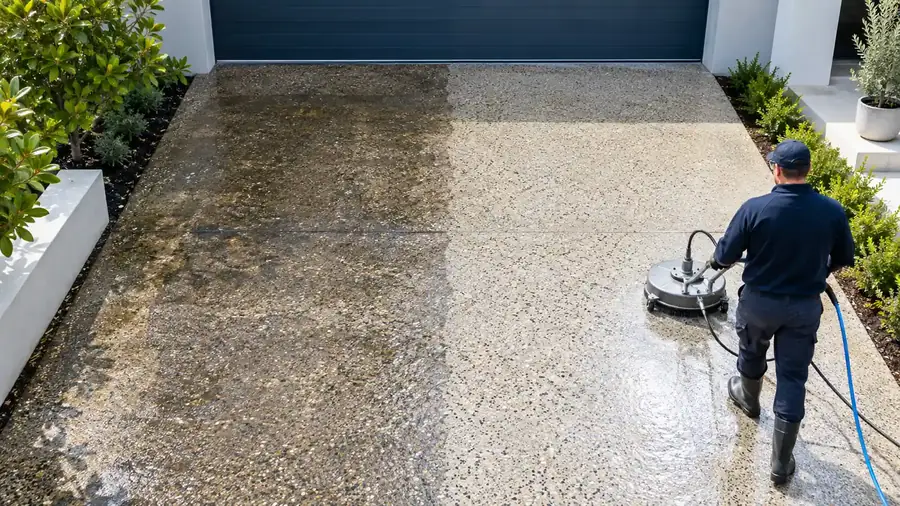
Driveway pressure cleaning
Plain, coloured and exposed aggregate driveways cleaned edge to edge with a surface cleaner, so there are no stripes left behind.
Pressure High
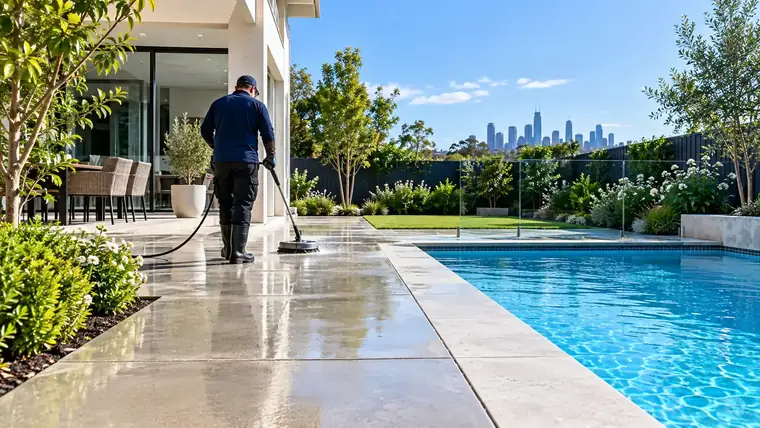
Concrete cleaning
Paths, pool surrounds, alfresco slabs and garage floors, with mould treated first so it does not come straight back.
Pressure High
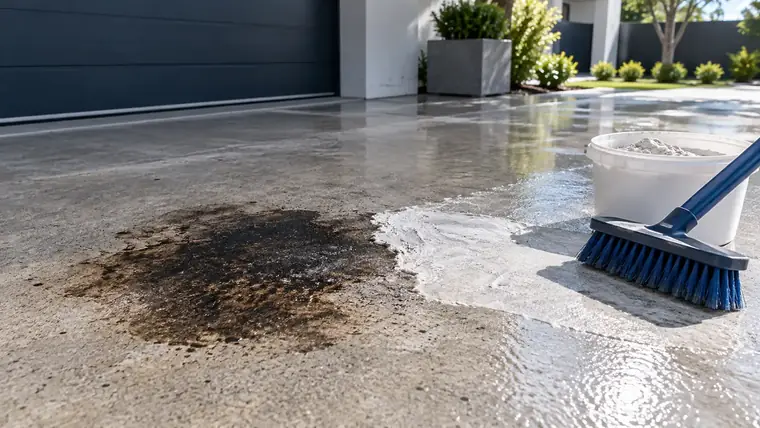
Oil stain removal
Car drips, sump leaks and tyre marks broken down with degreaser, dwell time and hot water before the main clean.
Pressure Hot
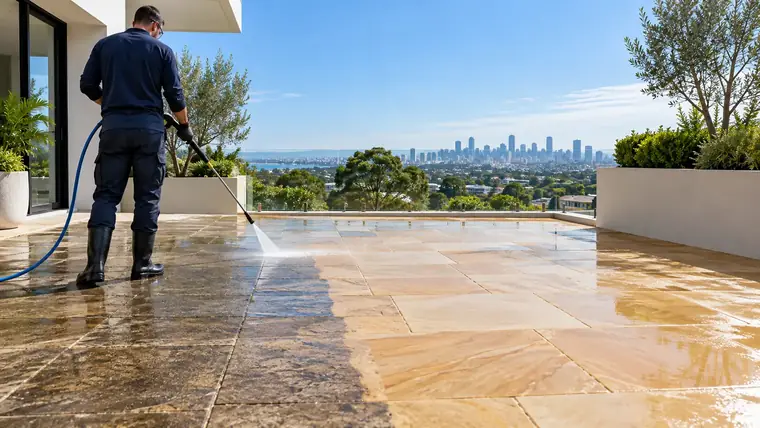
Paver and patio cleaning
Concrete, sandstone, bluestone and travertine pavers, with softer stone cleaned gently and jointing sand kept in place.
Pressure Medium
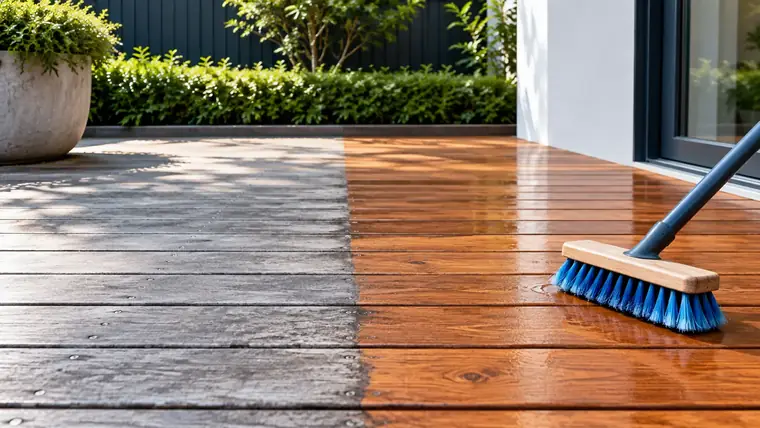
Deck cleaning
Timber and composite decks washed along the grain at low pressure, so the boards come up clean rather than furry.
Pressure Low
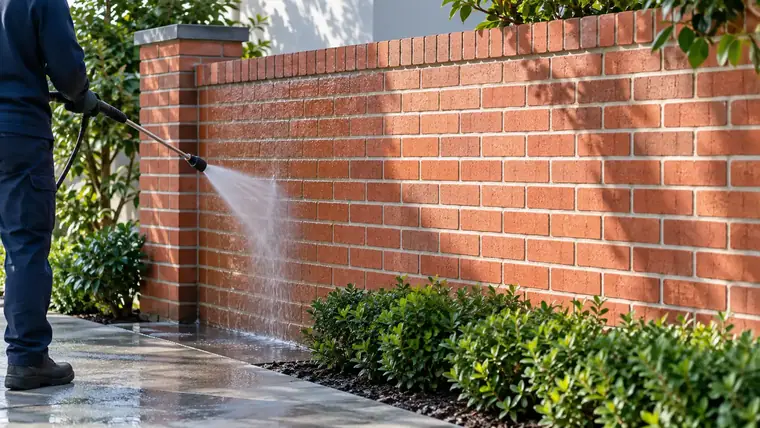
Brick cleaning
Brick walls, fences and letterbox piers, with moss and grime lifted and the mortar joints left where they belong.
Pressure Medium
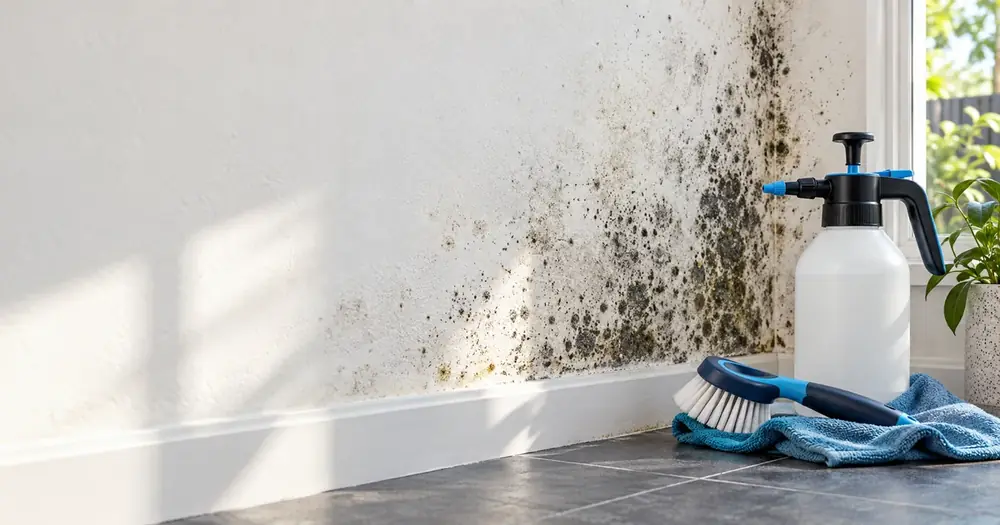
House washing and soft washing
Render, weatherboard, cladding and painted walls cleaned with a mild solution and a gentle rinse, all from the ground.
Pressure Soft
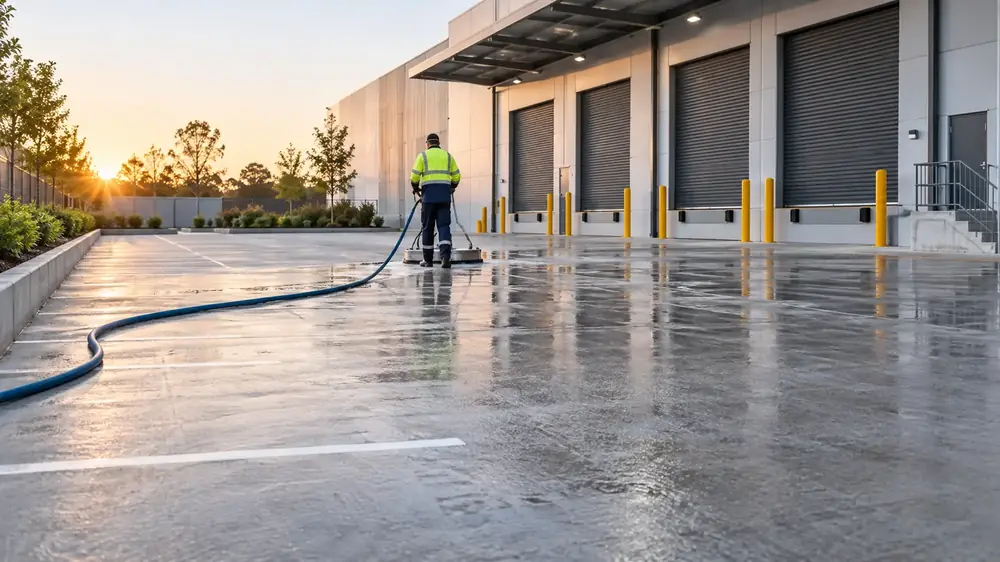
Commercial pressure cleaning
Car parks, loading docks, shopfronts, footpaths and bin areas, booked around your trading hours.
Pressure Highest
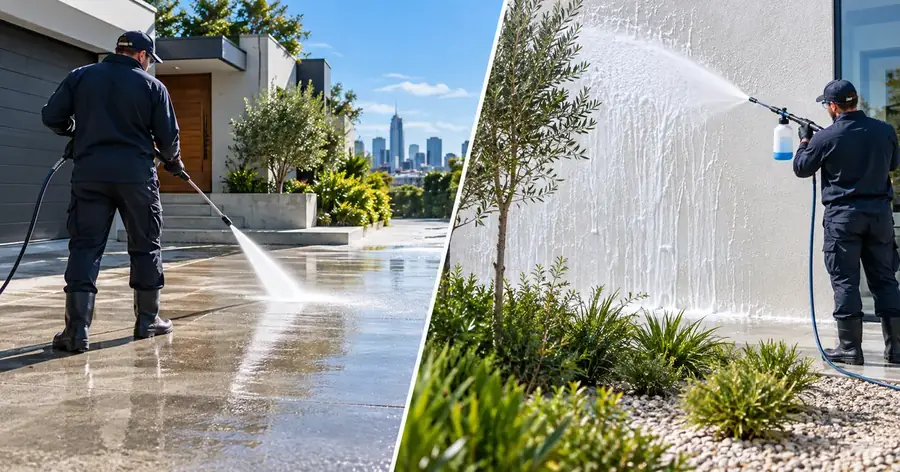 PressureSoft wash
Choosing the method
Pressure washing or soft washing: which does your surface need?
Pick pressure washing for dense, hard surfaces such as concrete, exposed aggregate and most brick, where the force of the water does the cleaning. Pick soft washing for render, painted walls, cladding, timber and soft sandstone, where a cleaning solution kills the growth and low pressure simply rinses it away.
High pressure on the wrong surface does real harm. It cuts lines into acrylic render, strips paint, pushes water behind cladding and window seals, raises the grain on softwood decks and pits sandstone. The damage often shows up weeks later, when the surface dries and the marks become obvious.
Soft washing gets around that by letting chemistry do the work. The solution breaks down mould, algae and lichen, including the spores sitting in the pores of the surface, so results tend to last longer than a blast that only removes what you can see. Garden beds are soaked before and after so plants are protected. For the full method on walls, see our page on soft washing for houses and rendered walls.
| Question | Pressure washing | Soft washing |
|---|---|---|
| How it cleans | Force of the water strips dirt and growth off the surface | A cleaning solution breaks down growth, water rinses it off |
| Typical pressure | 1,500 to 4,000 PSI | Under 500 PSI |
| Suits | Concrete, exposed aggregate, bluestone, sound brick, commercial slabs | Render, painted walls, weatherboard, cladding, timber, sandstone |
| Risky on | Anything soft, painted or sealed with a weak coating | Heavy oil or thick grease, which need heat and degreaser |
| How long it lasts | Until growth returns, often sooner on shaded ground | Usually longer, because spores are killed rather than scattered |
Surface pressure guide
How much pressure does each surface take?
Sound concrete takes 3,000 to 4,000 PSI through a surface cleaner, pavers and brick sit lower, and timber, render and soft stone need 1,200 PSI or less, or no real pressure at all. Age and condition matter as much as the material, so we always test a hidden patch first.
Figures are typical nozzle pressures for commercial machines, given so you can judge a quote. They are not settings to copy with a hire unit, which behaves differently.
Concrete driveway 3,000 to 4,000 PSI
- Tool
- Rotary surface cleaner, then a turbo or fan tip for edges and expansion joints.
- Water
- Cold for general grime; hot where oil or tyre rubber is involved.
- Watch for
- New concrete. A slab less than about a month old is still curing and should not be pressure washed.
Exposed aggregate 2,500 to 3,000 PSI
- Tool
- Surface cleaner run a little slower and higher than on plain concrete.
- Water
- Cold, with a mould treatment on shaded sections.
- Watch for
- Loose stones and tired sealer. Old sealer often flakes during a clean, which means resealing is due.
Concrete pavers 1,500 to 2,500 PSI
- Tool
- Surface cleaner on a lower setting, or a wide fan tip kept moving.
- Water
- Cold, with weed and moss treatment in the joints.
- Watch for
- Jointing sand washing out. Pavers usually need re-sanding after a clean to stay locked in place.
Sandstone or limestone 500 to 1,200 PSI
- Tool
- Pre-treatment does the work; a wide fan tip rinses from a distance.
- Water
- Cold only, with stone-safe cleaners rather than acids.
- Watch for
- Pitting and a sanded, rough face. Soft stone erodes quickly under a narrow jet.
Brick walls and fences 1,000 to 2,000 PSI
- Tool
- 25 to 40 degree fan tip, held well back and angled away from joints.
- Water
- Cold, with a mould treatment on south-facing walls.
- Watch for
- Soft lime mortar in older homes, which can wash out of the joints under too much force.
Timber deck 500 to 1,200 PSI
- Tool
- Deck cleaner first, then a 40 degree fan tip run along the boards.
- Water
- Cold. The deck needs a couple of dry days before any oil goes on.
- Watch for
- Furry, splintered boards on softwood. Composite boards have their own maker limits, which we follow.
Render and paint Under 500 PSI
- Tool
- Soft-wash sprayer for the solution, low-pressure rinse from the ground.
- Water
- Cold, with plants and garden beds soaked before and after.
- Watch for
- Hairline cracks and flaking paint, which we photograph and point out before starting.
Greasy commercial slab 3,000 to 4,000 PSI + heat
- Tool
- Hot water unit with a surface cleaner, degreaser worked in ahead of it.
- Water
- Heated, which lifts fats and oils that cold water only smears.
- Watch for
- Run-off. Greasy wash water has to be captured, not rinsed into a drain.
Driveways and concrete
How do we clean driveways and concrete?
We sweep the slab, pre-treat stains and growth, clean the whole area with a rotary surface cleaner for an even finish, then detail the edges, steps and joints. Oil, rust and tyre marks get their own treatment before the main pass, because pressure alone rarely shifts them.
A driveway is usually the biggest single surface on a property and the one people notice first from the street. Plain grey concrete, coloured concrete and exposed aggregate each react a little differently, so the surface cleaner speed and height change with them. Our page on driveway cleaning in Melbourne covers each type in detail.
Paths, side passages, pool surrounds, alfresco slabs and garage floors follow the same approach, often in the same visit. Around pools we keep wash water and cleaning products out of the water and off the coping. More on those jobs is on our concrete path and slab cleaning page.
Stains are where expectations need to be honest. Fresh marks usually lift completely. Old ones sometimes only fade, and we would rather say so from the photo than surprise you on the day. Our guide to what oil stain treatment can achieve explains why.
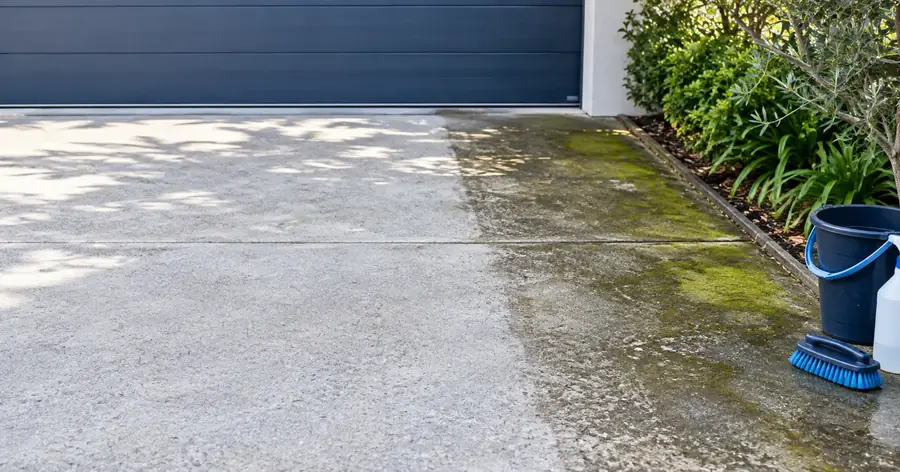
Oil and car drips
A degreaser is worked in and left to dwell, then hot water lifts it out of the pores.
Fresh drips: usually gone. Years-old soaked patches: often a faint shadow remains.Tyre marks
Rubber left where hot tyres turn on the slab, common at the garage entry and on coloured concrete.
Usually lifts with degreaser and a hot rinse.Black mould and algae
Grows on shaded, damp concrete, especially the strip beside a fence that never gets winter sun.
Treated first, or it tends to green up again within months.Rust marks
From bore-water sprinklers, fertiliser pellets or metal furniture left on the slab.
Needs a rust remover, not more pressure. Most marks fade well.Efflorescence
A white, powdery bloom of salts drawn out of concrete and pavers by moisture.
Extra water can make it worse, so it is treated on a dry surface.Leaf and tannin stains
Brown shadows where gum, oak or liquidambar leaves sat wet on the surface over winter.
Usually lifts with an oxygen-based cleaner and a rinse.What a clean cannot fix: cracks, spalling, etching left by an old acid wash, and sealer that has already failed. If your photo shows any of these, we will tell you before you book.
Pavers, decks and brick
Can pavers, decks and brick be pressure washed without damage?
Yes, provided the pressure, nozzle and distance suit the material. Pavers need their joints protected, timber is washed along the grain at low pressure, and brick needs its mortar respected, especially on older Melbourne homes where the mortar is softer than the brick around it.
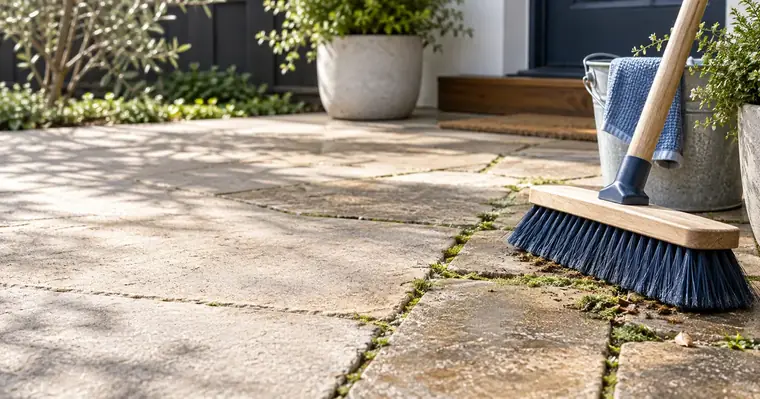
Pavers and patios
Our methodConcrete pavers take a surface cleaner on a lower setting. Sandstone, limestone and travertine are softer, so they get a treatment first and a wide fan rinse. Bluestone copes with more pressure but streaks if it is cleaned unevenly.
When it is rushedJointing sand blasted out, pavers left rocking, and soft stone pitted by a narrow jet.
More on paver and patio work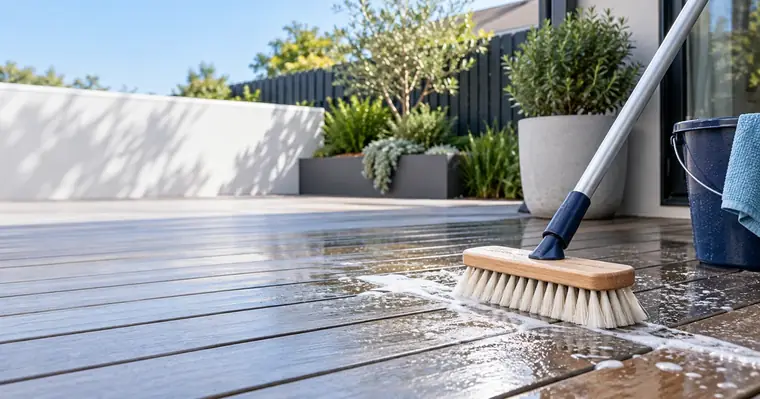
Timber and composite decks
Our methodA deck cleaner goes on first to loosen grey, weathered fibres and mould, then a low-pressure fan tip rinses along the boards, never across them. The deck is left to dry for a couple of days before any oil goes on.
When it is rushedFurry, splintered boards, raised grain, and pale stripes where the tip got too close.
How timber and composite decks are washed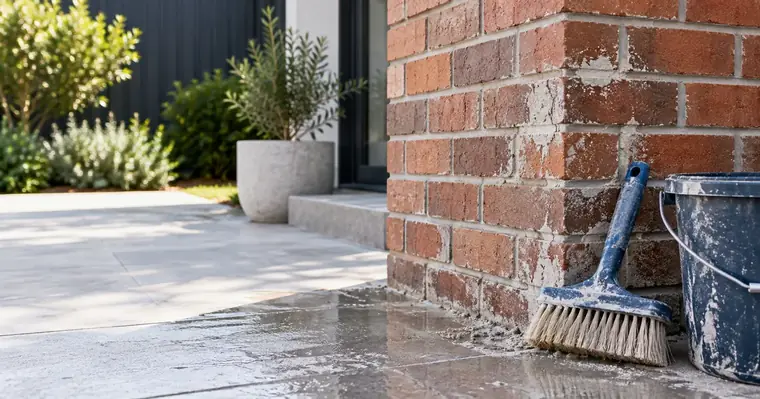
Brick walls and fences
Our methodA fan tip held well back, with a mould treatment on shaded faces. New brickwork with mortar smears is a different job again, handled with a brick cleaner rather than extra pressure.
When it is rushedHollowed mortar joints, water forced into cavity walls, and the face scoured off soft bricks.
Cleaning brick without harming the mortar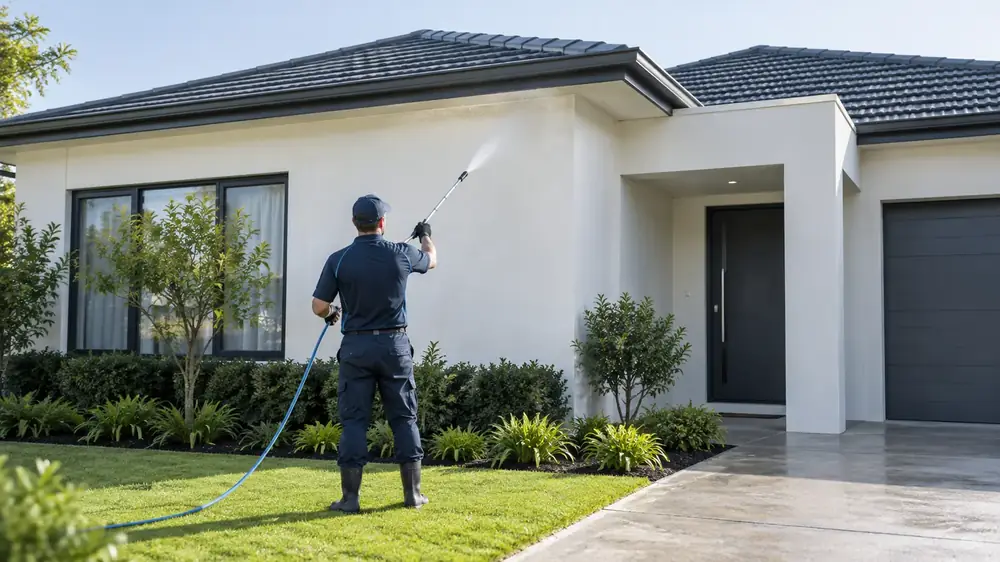
House washing
How is a house washed without harming render or paint?
A house is soft washed: a mild cleaning solution goes on at low pressure, sits long enough to loosen dirt, mould and cobwebs, then gets rinsed off with a gentle flow. Nothing is blasted, so paint, render, seals and flyscreens stay as they were.
- Walk around first
Cracked render, flaking paint, open vents and outdoor power points are noted and photographed.
- Protect the garden
Beds are soaked, delicate plants covered, and windows and doors closed.
- Apply from the bottom up
Working upward stops the solution running down dry walls and leaving streaks.
- Let it work
A few minutes of dwell time, never long enough to dry on a hot wall.
- Rinse from the top down
A low-pressure rinse, then the garden gets a second soaking.
Single-storey homes are done entirely from the ground. Upper walls on double-storey homes are reached with extension poles from the ground, and nobody climbs onto the roof. Weatherboard, fibre cement and metal cladding follow the same process. The details are on our page about washing a house exterior.
Commercial and industrial
What do commercial and industrial sites need from a pressure cleaner?
A commercial site needs the clean planned around trading hours, safety paperwork sorted before anyone arrives, and wash water controlled so it cannot reach a stormwater drain. We work early mornings, nights and weekends, and send a safe work method statement and insurance details with the quote.
Stormwater drains in Melbourne run straight to creeks, rivers and the bay with no treatment. EPA Victoria's stormwater guidance says everyone must prevent waste from entering those drains, and greasy or chemical-laden wash water counts as waste. On larger sites we set up drain covers, bunding and a recovery vacuum so it can be collected instead.
More on how we plan site work is on the commercial and industrial pressure cleaning page.
- Car parks, basements and ramps
- Loading docks and forklift aisles
- Shopfronts, awnings and footpaths
- Bin rooms, wash bays and grease traps surrounds
- Hospitality courtyards and dumpster pads
- Strata entries, paths and common areas
In March 2025, EPA Victoria fined a developer nearly $4,000 after high-pressure cleaning of a new driveway in Maddingley sent contaminated wash water into drains that lead to the Werribee River. It is a useful reminder that the person holding the wand is responsible for where the water goes.
Prices
What does pressure washing cost in Melbourne?
Most pressure washing in Melbourne is priced by area, at roughly $3 to $6 per square metre for concrete, with a minimum charge of about $180 for small jobs. A typical double driveway comes in between $180 and $350, and a single-storey house wash between $350 and $650.
| Job | Typical size | Guide price | What moves it |
|---|---|---|---|
| Double driveway | 35 to 50 m² | $180 to $350 | Oil stains, exposed aggregate, steep access |
| Paths and alfresco slabs | Per m² | $3 to $6 per m² | Mould build-up, furniture and pots to move |
| Pavers and patios | Per m² | $4 to $8 per m² | Soft stone, re-sanding the joints |
| Timber deck | 20 to 40 m² | $180 to $380 | Condition, steps and balustrades |
| Brick fence or wall | One run | $150 to $350 | Height, mould, mortar condition |
| Single-storey house wash | 3 bedrooms | $350 to $650 | Render or cladding, garden access |
| Double-storey house wash | 4 bedrooms | $600 to $1,100 | Upper walls, balconies, eaves |
| Oil stain treatment | Per stained area | $60 to $150 | Age and depth of the stain |
| Commercial sites | Per site | Quoted per site | Hours, hot water, water recovery |
Where we work
Which Melbourne suburbs and regions do our crews service?
Our crews work right across metropolitan Melbourne and the Mornington Peninsula: the west and north, the inner suburbs and bayside, the eastern suburbs, and the south-east down to Portsea. If your suburb is not listed below, send the job through anyway, because most of Greater Melbourne is within reach.
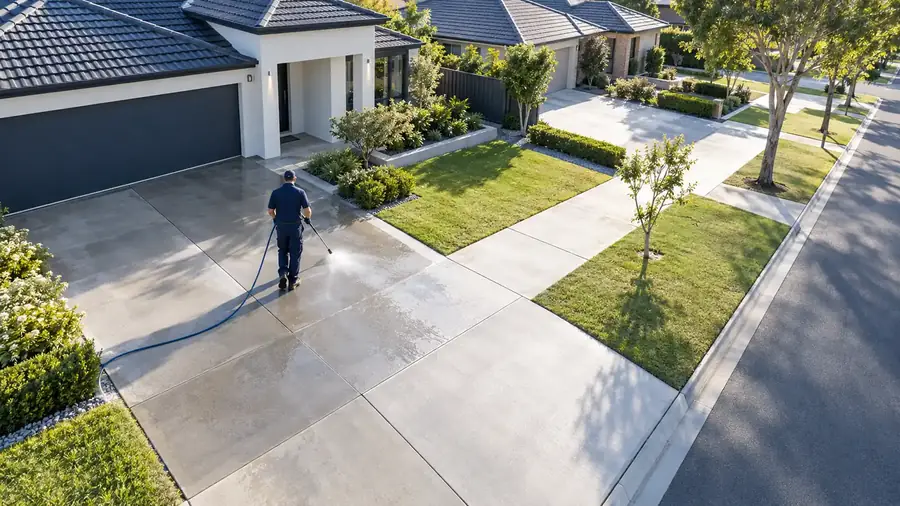
Driveways, decks and walls from Werribee to the PeninsulaOuter suburbs and peninsula jobs are often grouped on set days, which keeps travel off your quote.
West and north
Newer estates with big exposed aggregate driveways, and older brick homes closer in.
- Sunshine
- Footscray
- Williamstown
- Point Cook
- Werribee
- Melton
- Caroline Springs
- Essendon
- Coburg
- Preston
- Reservoir
- Craigieburn
- Epping
Inner and bayside
Period brick, bluestone laneways, terraces and salt-air paving near the beach.
- Richmond
- Fitzroy
- Brunswick
- Northcote
- Fairfield
- South Yarra
- St Kilda
- Elwood
- Brighton
- Hampton
- Sandringham
- Mentone
East
Leafy streets, which means tannin stains, shaded paths and plenty of moss.
- Kew
- Hawthorn
- Camberwell
- Balwyn
- Doncaster
- Box Hill
- Blackburn
- Glen Waverley
- Ringwood
- Croydon
- Mitcham
South-east and Mornington Peninsula
Growth-corridor driveways, holiday homes and decks that face the weather.
- Oakleigh
- Dandenong
- Berwick
- Narre Warren
- Cranbourne
- Lynbrook
- Officer
- Frankston
- Mornington
- Mount Martha
- Rosebud
- Sorrento
- Portsea
The full suburb list, grouped by region, is on our service areas page.
On the day
What happens on the day of the clean?
On the day we walk the area, protect anything that should stay dry, clean in sections, rinse and check the result, then show you before packing up. You do not need to be home for most outdoor jobs, as long as we can reach an outside tap and the area is clear of cars.
- 1Walk and test
We confirm the scope, note existing damage and test a hidden patch.
- 2Protect
Plants soaked, vents and power points covered, drains blocked where needed.
- 3Treat
Stains, mould and algae pre-treated and left to work.
- 4Clean
Surface cleaner on open areas, fan tip on edges, steps and joints.
- 5Rinse and check
Everything rinsed, debris swept up, and the result checked with you.
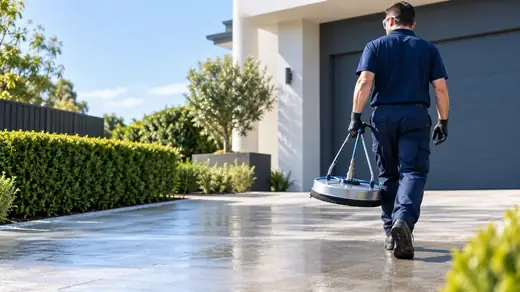
Want to know who turns up and what they bring? Read about us for the crew, the equipment and the insurance we carry.
Book a cleanSend a photo
How do you get a price from a photo?
Take two or three photos, one wide shot showing the whole area and one close up of the worst stain, then send them with your suburb and a rough size. We reply with the method we would use and a written price, and the price does not change on the day unless the job does.
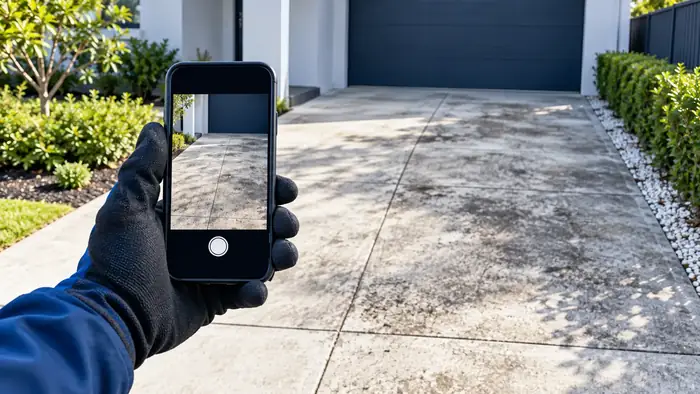
Stand back. Get the whole driveway, deck or wall in one frame, from the street or the far corner.
Get close. Photograph the worst stain, moss patch or mark so we can judge what will lift.
Add the awkward bits. Steps, tight side access or a slope all change the time on site.
Questions
What do homeowners usually ask us about pressure washing?
How much does pressure washing cost in Melbourne?
Will pressure washing damage my surface?
What is the difference between pressure washing and soft washing?
Can you get oil stains out of a driveway?
Do you need water or power from me?
How often should a driveway be cleaned?
More answers on water use, run-off, sealing and damage are in our pressure washing FAQ.
Dirty driveway, tired deck or grubby walls?Send a photo today and get a written price for the whole job.
Send a photo